
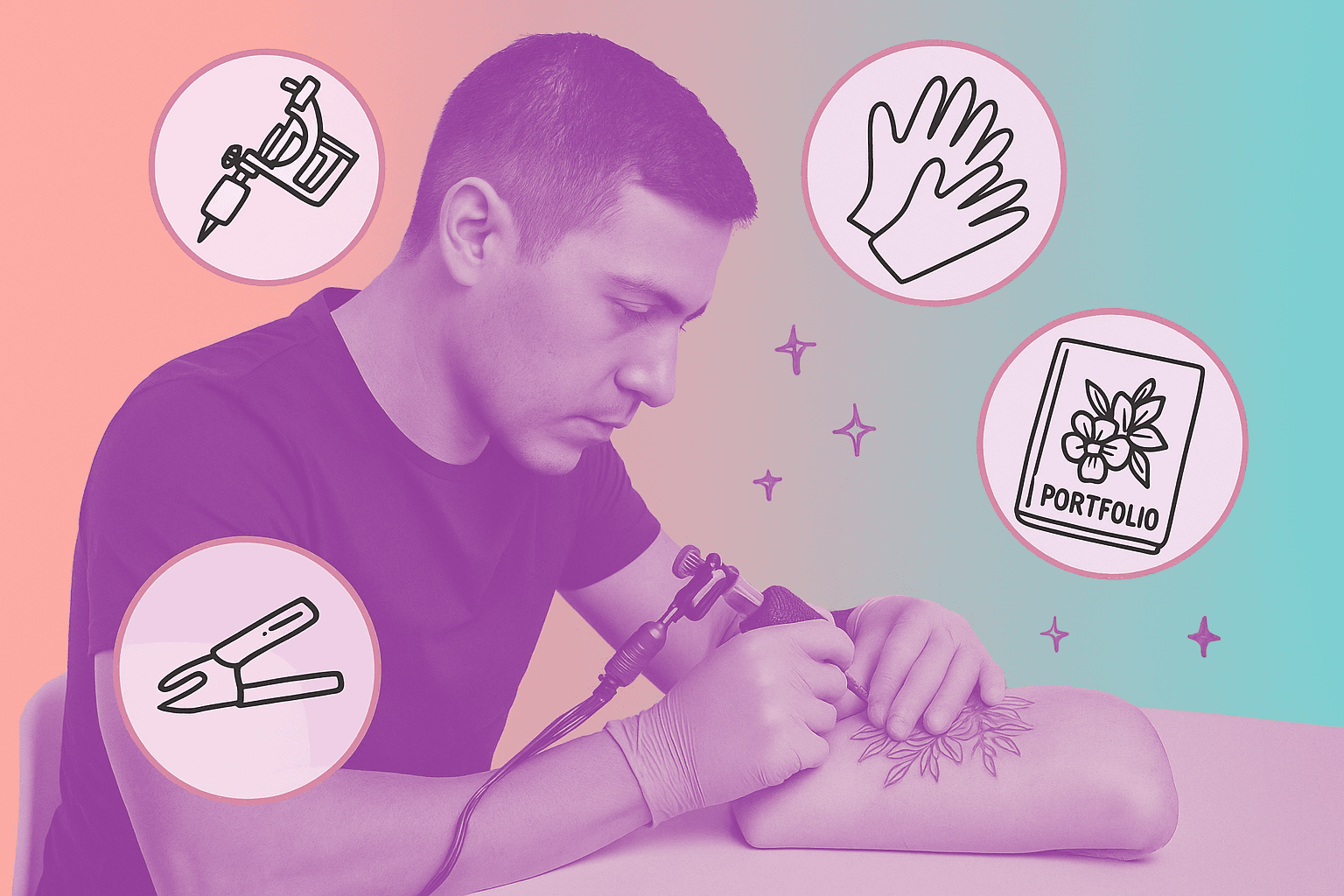
Tattoo artistry is booming, and aspiring artists are hungry to learn from experienced professionals without the traditional apprenticeship barriers.
The tattoo industry has exploded over the past decade, with the global tattoo market expected to reach $3.55 billion by 2026. More people than ever want to learn tattooing, but finding quality education outside traditional apprenticeships is tough.
That's where you come in. If you're an experienced tattoo artist, selling an online course lets you share your expertise with hundreds of students worldwide while building a profitable side business.
Ready to turn your tattoo knowledge into an online course? Try Teachery free for 14 days and start building your course today.
Key Facts
Market size: The global tattoo market is projected to reach $3.55 billion by 2026
Course pricing: Beginner tattoo courses typically sell for $97-$297, while advanced technique courses can command $497-$997
Platform fees: Teachery charges 0% transaction fees on all plans, while other platforms like Teachable charge up to 5%
Learning demand: Traditional tattoo apprenticeships can take 2-4 years, making online education an attractive faster alternative for basic skills
Why Tattooing is Perfect for Online Courses
Tattooing might seem like a hands-on skill that can't be taught online, but here's the thing - most aspiring tattoo artists struggle with the fundamentals long before they touch real skin.
High visual learning demand. Tattooing is incredibly visual. Students need to see line work techniques, shading methods, and color blending up close. High-quality video content lets you show these details better than any in-person demonstration where students crowd around trying to get a good view.
Expensive equipment barriers. A basic tattoo setup costs $200-$500 minimum. Many people want to learn the theory and fundamentals before investing in equipment. Your course can teach them everything from needle selection to machine setup, helping them make smarter purchasing decisions.
Limited apprenticeship opportunities. Traditional tattoo shops only take 1-2 apprentices at a time, and many charge $2,000-$5,000 for apprenticeship programs. Online courses make your knowledge accessible to hundreds of students simultaneously.
Practice skin alternatives are cheap. Students can practice on synthetic skin, fruit, or silicone practice pads that cost under $50. Your course can guide them through these practice methods before they ever touch human skin.
Portfolio development guidance. New artists struggle with building portfolios that get them hired. You can teach portfolio curation, photography tips, and client communication - skills that complement the technical tattoo training.
What to Include in Your Tattoo Course
Your course should take students from complete beginners to confident practitioners ready for formal apprenticeships or entry-level positions. Here are the core modules that sell:
Module 1: Tattoo Fundamentals and Safety
Cover sterilization, bloodborne pathogens, workspace setup, and legal requirements. This builds credibility and shows you take safety seriously. Include downloadable checklists for equipment sterilization and workspace organization.
Module 2: Equipment Deep Dive
Break down different machine types (rotary vs. coil), needle configurations, ink selection, and power supply settings. Create equipment buying guides with specific product recommendations and budget options for different skill levels.
Module 3: Design and Stencil Creation
Teach drawing fundamentals, design adaptation for skin, stencil application, and freehand techniques. Include practice exercises and downloadable design templates students can trace and modify.
Module 4: Basic Line Work Techniques
Demonstrate proper hand positioning, machine angle, needle depth, and line consistency. Film close-up shots of your hands working on practice skin. Provide exercises that progress from straight lines to curves to complex patterns.
Module 5: Shading and Color Theory
Cover different shading techniques (whip shading, stippling, smooth gradients), color mixing, and saturation levels. Show how different needle configurations create different effects. Include color wheel exercises and shading practice sheets.
Module 6: Common Mistakes and Problem Solving
Address blowouts, overworking skin, inconsistent lines, and healing issues. This module prevents students from developing bad habits early. Include before/after photos showing proper technique corrections.
Module 7: Portfolio Building and Business Basics
Teach portfolio photography, client consultation, pricing basics, and shop etiquette. Help students position themselves for apprenticeships or freelance work. Include portfolio templates and client intake forms.
Module 8: Advanced Techniques (Premium tier)
Cover realistic portraits, geometric patterns, watercolor effects, or your signature style. This becomes your premium module that justifies higher pricing for experienced students wanting to level up.
How to Price Your Tattoo Course
Tattoo course pricing depends on your experience level, course depth, and included bonuses. Here's what the market supports:
Beginner-focused courses: $97-$297
These cover fundamentals, safety, and basic techniques. Price toward the lower end if you're newer to teaching, higher if you have 10+ years of experience or notable shop affiliations. Include equipment guides and practice exercises to justify the price.
Comprehensive programs: $297-$597
Full start-to-finish training with multiple modules, live Q&A sessions, and portfolio review. This price range works if you include ongoing support or community access. Students see this as an alternative to expensive apprenticeship fees.
Premium/specialty courses: $497-$997
Advanced technique courses, style-specific training (like Japanese traditional or realistic portraits), or courses that include one-on-one coaching calls. Only price this high if you're well-known in the tattoo community or have unique specialized knowledge.
Payment plans work well. Offer 3-pay options to make higher-priced courses accessible. Many students are younger with limited upfront cash but steady income from other jobs.
Avoid pricing below $97. Cheap courses attract tire-kickers who won't take the training seriously. Tattooing requires commitment and practice - students who invest more financially tend to engage more deeply with your content.
How to Find Students and Market Your Course
Marketing a tattoo course requires reaching aspiring artists where they already spend time learning and getting inspired.
Instagram and TikTok content marketing
Post time-lapse videos of your work, technique breakdowns, and equipment reviews. Use hashtags like #tattooartist, #tattooeducation, and #learntotattoo. Share behind-the-scenes content from your course creation process. Engage with comments and DMs - personal connection converts better than polished ads in this community.
YouTube tutorials as course teasers
Create 10-15 minute tutorials covering basic topics like 'How to Set Up Your First Tattoo Machine' or 'Common Beginner Mistakes to Avoid.' These build authority and funnel viewers to your paid course. Include clear calls-to-action and course previews in your video descriptions.
Tattoo convention networking
Attend local conventions not just as an artist, but as an educator. Bring course flyers, business cards, and offer mini-consultations about getting started in tattooing. Many convention-goers are hobbyists considering the jump to professional tattooing.
Partnerships with tattoo supply companies
Many online tattoo supply retailers have blogs, newsletters, or social media followings. Offer to write guest content about education/training topics in exchange for mentions of your course. Some might even offer your course as a bonus with equipment purchases.
Real talk: Avoid Facebook ads initially. Facebook's advertising policies are strict around tattoo-related content, and your ads might get rejected. Focus on organic content and word-of-mouth marketing first.
Choosing the Right Platform for Your Tattoo Course
You need a course platform that handles video content well, gives you design control to match your artistic brand, and doesn't eat into your profits with high fees.
Most tattoo artists we've worked with want their course site to reflect their artistic style. Cookie-cutter templates don't cut it when your personal brand is built on creativity and visual appeal.
Teachery gives you complete design control - custom colors, font uploads, and flexible layouts so your course looks as unique as your tattoo work. You can match your website to your Instagram aesthetic or shop branding without being locked into generic templates.
The pricing matters too. Teachery charges 0% transaction fees on all plans, which means you keep more of each sale. If you're selling a $297 course and make 50 sales, that's $742.50 you keep instead of paying to platforms like Teachable that charge 5% on their basic plans.
For tattoo courses specifically, you'll want unlimited video hosting and the ability to embed high-quality content from YouTube or Vimeo. Teachery handles both seamlessly, plus you get unlimited courses and students on every plan.
Looking for alternatives to expensive monthly platforms? Check out our comparisons of Kajabi alternatives and Gumroad alternatives for online courses to see how different platforms stack up for creative professionals.
Technical Setup Tips for Video-Heavy Courses
Tattoo courses are inherently visual, so your video quality makes or breaks the student experience. Here's what actually matters:
Lighting beats expensive cameras. Good lighting on your hands and workspace matters more than 4K resolution. Ring lights or softbox setups cost $50-$200 and dramatically improve your video quality.
Multiple camera angles. Film from above to show your full workspace, and from the side to show hand positioning and machine angle. Students need to see both perspectives to understand technique properly.
Close-up detail shots. Use macro lenses or phone close-up modes to show needle depth, ink saturation, and fine line details. These shots often become the most valuable parts of your course.
Audio quality matters. Use a lapel mic or boom mic setup. Students need to hear your explanations clearly, especially when you're describing pressure, speed, and technique adjustments.
Related Reading
Frequently Asked Questions
How much money can you make selling a tattoo course online?
Income varies widely based on pricing, marketing, and audience size. A $297 course selling 20 copies monthly generates $5,940 in revenue. Successful tattoo educators report earning $3,000-$15,000 monthly from courses, with higher earners typically having established social media followings or shop reputations.
Do you need special licenses to teach tattooing online?
Online tattoo education typically doesn't require special teaching licenses since you're not providing hands-on training or apprenticeships. However, you should clearly state that your course provides foundational knowledge and that students must complete proper apprenticeships or meet local licensing requirements before tattooing clients professionally.
What's the best platform to sell a tattoo course online?
Teachery works well for tattoo courses because it offers complete design customization to match your artistic brand, charges 0% transaction fees, and handles unlimited video content. Other options include Teachable and Kajabi, but they charge higher monthly fees or transaction fees that can eat into your profits.
How long should a beginner tattoo course be?
Most successful beginner tattoo courses contain 8-12 hours of video content spread across 6-8 modules. This gives students comprehensive coverage without overwhelming them. Include practice exercises and assignments between modules to reinforce learning and extend the course experience over several weeks.
Ready to turn your tattoo expertise into a profitable online course? The demand is there, the tools are available, and the market is hungry for quality education from experienced artists. Start your free Teachery trial today and begin building the course that could transform both your business and your students' careers.
The tattoo industry has exploded over the past decade, with the global tattoo market expected to reach $3.55 billion by 2026. More people than ever want to learn tattooing, but finding quality education outside traditional apprenticeships is tough.
That's where you come in. If you're an experienced tattoo artist, selling an online course lets you share your expertise with hundreds of students worldwide while building a profitable side business.
Ready to turn your tattoo knowledge into an online course? Try Teachery free for 14 days and start building your course today.
Key Facts
Market size: The global tattoo market is projected to reach $3.55 billion by 2026
Course pricing: Beginner tattoo courses typically sell for $97-$297, while advanced technique courses can command $497-$997
Platform fees: Teachery charges 0% transaction fees on all plans, while other platforms like Teachable charge up to 5%
Learning demand: Traditional tattoo apprenticeships can take 2-4 years, making online education an attractive faster alternative for basic skills
Why Tattooing is Perfect for Online Courses
Tattooing might seem like a hands-on skill that can't be taught online, but here's the thing - most aspiring tattoo artists struggle with the fundamentals long before they touch real skin.
High visual learning demand. Tattooing is incredibly visual. Students need to see line work techniques, shading methods, and color blending up close. High-quality video content lets you show these details better than any in-person demonstration where students crowd around trying to get a good view.
Expensive equipment barriers. A basic tattoo setup costs $200-$500 minimum. Many people want to learn the theory and fundamentals before investing in equipment. Your course can teach them everything from needle selection to machine setup, helping them make smarter purchasing decisions.
Limited apprenticeship opportunities. Traditional tattoo shops only take 1-2 apprentices at a time, and many charge $2,000-$5,000 for apprenticeship programs. Online courses make your knowledge accessible to hundreds of students simultaneously.
Practice skin alternatives are cheap. Students can practice on synthetic skin, fruit, or silicone practice pads that cost under $50. Your course can guide them through these practice methods before they ever touch human skin.
Portfolio development guidance. New artists struggle with building portfolios that get them hired. You can teach portfolio curation, photography tips, and client communication - skills that complement the technical tattoo training.
What to Include in Your Tattoo Course
Your course should take students from complete beginners to confident practitioners ready for formal apprenticeships or entry-level positions. Here are the core modules that sell:
Module 1: Tattoo Fundamentals and Safety
Cover sterilization, bloodborne pathogens, workspace setup, and legal requirements. This builds credibility and shows you take safety seriously. Include downloadable checklists for equipment sterilization and workspace organization.
Module 2: Equipment Deep Dive
Break down different machine types (rotary vs. coil), needle configurations, ink selection, and power supply settings. Create equipment buying guides with specific product recommendations and budget options for different skill levels.
Module 3: Design and Stencil Creation
Teach drawing fundamentals, design adaptation for skin, stencil application, and freehand techniques. Include practice exercises and downloadable design templates students can trace and modify.
Module 4: Basic Line Work Techniques
Demonstrate proper hand positioning, machine angle, needle depth, and line consistency. Film close-up shots of your hands working on practice skin. Provide exercises that progress from straight lines to curves to complex patterns.
Module 5: Shading and Color Theory
Cover different shading techniques (whip shading, stippling, smooth gradients), color mixing, and saturation levels. Show how different needle configurations create different effects. Include color wheel exercises and shading practice sheets.
Module 6: Common Mistakes and Problem Solving
Address blowouts, overworking skin, inconsistent lines, and healing issues. This module prevents students from developing bad habits early. Include before/after photos showing proper technique corrections.
Module 7: Portfolio Building and Business Basics
Teach portfolio photography, client consultation, pricing basics, and shop etiquette. Help students position themselves for apprenticeships or freelance work. Include portfolio templates and client intake forms.
Module 8: Advanced Techniques (Premium tier)
Cover realistic portraits, geometric patterns, watercolor effects, or your signature style. This becomes your premium module that justifies higher pricing for experienced students wanting to level up.
How to Price Your Tattoo Course
Tattoo course pricing depends on your experience level, course depth, and included bonuses. Here's what the market supports:
Beginner-focused courses: $97-$297
These cover fundamentals, safety, and basic techniques. Price toward the lower end if you're newer to teaching, higher if you have 10+ years of experience or notable shop affiliations. Include equipment guides and practice exercises to justify the price.
Comprehensive programs: $297-$597
Full start-to-finish training with multiple modules, live Q&A sessions, and portfolio review. This price range works if you include ongoing support or community access. Students see this as an alternative to expensive apprenticeship fees.
Premium/specialty courses: $497-$997
Advanced technique courses, style-specific training (like Japanese traditional or realistic portraits), or courses that include one-on-one coaching calls. Only price this high if you're well-known in the tattoo community or have unique specialized knowledge.
Payment plans work well. Offer 3-pay options to make higher-priced courses accessible. Many students are younger with limited upfront cash but steady income from other jobs.
Avoid pricing below $97. Cheap courses attract tire-kickers who won't take the training seriously. Tattooing requires commitment and practice - students who invest more financially tend to engage more deeply with your content.
How to Find Students and Market Your Course
Marketing a tattoo course requires reaching aspiring artists where they already spend time learning and getting inspired.
Instagram and TikTok content marketing
Post time-lapse videos of your work, technique breakdowns, and equipment reviews. Use hashtags like #tattooartist, #tattooeducation, and #learntotattoo. Share behind-the-scenes content from your course creation process. Engage with comments and DMs - personal connection converts better than polished ads in this community.
YouTube tutorials as course teasers
Create 10-15 minute tutorials covering basic topics like 'How to Set Up Your First Tattoo Machine' or 'Common Beginner Mistakes to Avoid.' These build authority and funnel viewers to your paid course. Include clear calls-to-action and course previews in your video descriptions.
Tattoo convention networking
Attend local conventions not just as an artist, but as an educator. Bring course flyers, business cards, and offer mini-consultations about getting started in tattooing. Many convention-goers are hobbyists considering the jump to professional tattooing.
Partnerships with tattoo supply companies
Many online tattoo supply retailers have blogs, newsletters, or social media followings. Offer to write guest content about education/training topics in exchange for mentions of your course. Some might even offer your course as a bonus with equipment purchases.
Real talk: Avoid Facebook ads initially. Facebook's advertising policies are strict around tattoo-related content, and your ads might get rejected. Focus on organic content and word-of-mouth marketing first.
Choosing the Right Platform for Your Tattoo Course
You need a course platform that handles video content well, gives you design control to match your artistic brand, and doesn't eat into your profits with high fees.
Most tattoo artists we've worked with want their course site to reflect their artistic style. Cookie-cutter templates don't cut it when your personal brand is built on creativity and visual appeal.
Teachery gives you complete design control - custom colors, font uploads, and flexible layouts so your course looks as unique as your tattoo work. You can match your website to your Instagram aesthetic or shop branding without being locked into generic templates.
The pricing matters too. Teachery charges 0% transaction fees on all plans, which means you keep more of each sale. If you're selling a $297 course and make 50 sales, that's $742.50 you keep instead of paying to platforms like Teachable that charge 5% on their basic plans.
For tattoo courses specifically, you'll want unlimited video hosting and the ability to embed high-quality content from YouTube or Vimeo. Teachery handles both seamlessly, plus you get unlimited courses and students on every plan.
Looking for alternatives to expensive monthly platforms? Check out our comparisons of Kajabi alternatives and Gumroad alternatives for online courses to see how different platforms stack up for creative professionals.
Technical Setup Tips for Video-Heavy Courses
Tattoo courses are inherently visual, so your video quality makes or breaks the student experience. Here's what actually matters:
Lighting beats expensive cameras. Good lighting on your hands and workspace matters more than 4K resolution. Ring lights or softbox setups cost $50-$200 and dramatically improve your video quality.
Multiple camera angles. Film from above to show your full workspace, and from the side to show hand positioning and machine angle. Students need to see both perspectives to understand technique properly.
Close-up detail shots. Use macro lenses or phone close-up modes to show needle depth, ink saturation, and fine line details. These shots often become the most valuable parts of your course.
Audio quality matters. Use a lapel mic or boom mic setup. Students need to hear your explanations clearly, especially when you're describing pressure, speed, and technique adjustments.
Related Reading
Frequently Asked Questions
How much money can you make selling a tattoo course online?
Income varies widely based on pricing, marketing, and audience size. A $297 course selling 20 copies monthly generates $5,940 in revenue. Successful tattoo educators report earning $3,000-$15,000 monthly from courses, with higher earners typically having established social media followings or shop reputations.
Do you need special licenses to teach tattooing online?
Online tattoo education typically doesn't require special teaching licenses since you're not providing hands-on training or apprenticeships. However, you should clearly state that your course provides foundational knowledge and that students must complete proper apprenticeships or meet local licensing requirements before tattooing clients professionally.
What's the best platform to sell a tattoo course online?
Teachery works well for tattoo courses because it offers complete design customization to match your artistic brand, charges 0% transaction fees, and handles unlimited video content. Other options include Teachable and Kajabi, but they charge higher monthly fees or transaction fees that can eat into your profits.
How long should a beginner tattoo course be?
Most successful beginner tattoo courses contain 8-12 hours of video content spread across 6-8 modules. This gives students comprehensive coverage without overwhelming them. Include practice exercises and assignments between modules to reinforce learning and extend the course experience over several weeks.
Ready to turn your tattoo expertise into a profitable online course? The demand is there, the tools are available, and the market is hungry for quality education from experienced artists. Start your free Teachery trial today and begin building the course that could transform both your business and your students' careers.